Are you looking for expert advice...

When someone comes into your care with a medical cannabis prescription, you may have questions.

  • Is it legal?
  • Can they continue taking it?
  • How should it be stored?
  • What if it is prescribed as flower for vaping?
  • What if your hospital has a no-vaping policy?
  • Who should document it, administer it, or escalate concerns?
  • And what happens if the patient is due for surgery or becomes too unwell to self-administer?

Medical cannabis is now prescribed legally in the UK. Patients using cannabis-based medicinal products, known as CBPMs, may be admitted to hospital, hospice, residential care, or other inpatient settings while already taking these medicines.

For many healthcare teams, this can feel unfamiliar. But the starting point is straightforward: if a patient has a legal prescription, medical cannabis should be approached as a prescribed Schedule 2 controlled medicine, not as recreational cannabis. The key is to verify, document, assess risk, follow local controlled drug governance, and support the patient safely and professionally.

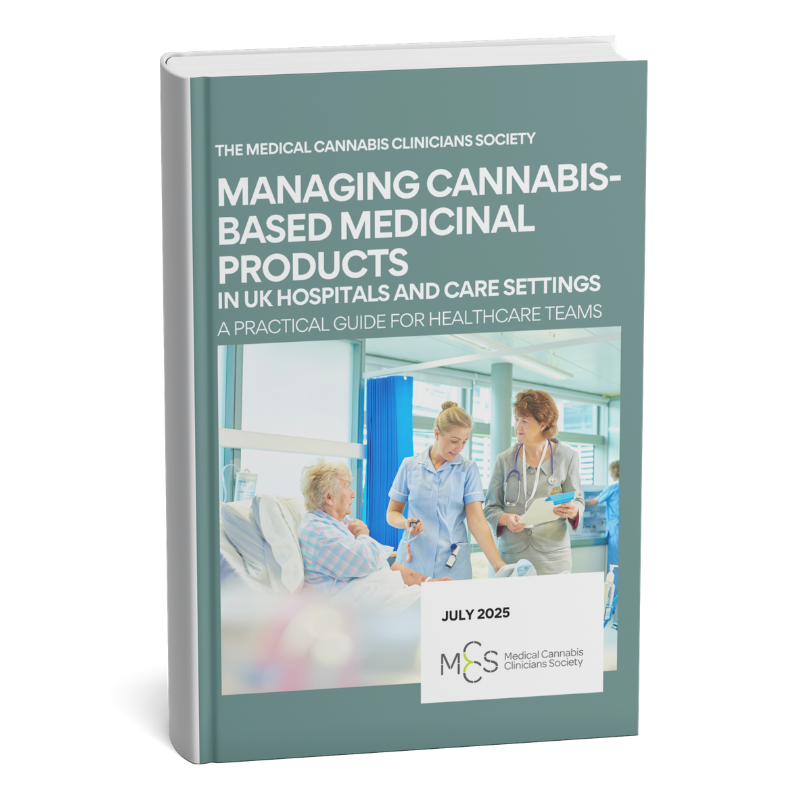
Free guide: Managing CBPMs in UK Hospitals and Care Settings


The Medical Cannabis Clinicians Society has created a practical guide for healthcare teams managing prescribed medical cannabis in hospital, hospice, and care settings.

The guide is designed for hospital doctors, anaesthetists, surgeons, pharmacists, nurses, hospice teams, care home teams, allied health professionals, clinical governance leads, controlled drug leads and any clinician or care professional supporting patients prescribed CBPMs

It covers the key questions teams are likely to face, including legal responsibilities, patient rights, prescription verification, documentation, storage, self-administration, disposal, contraindications, cautions, and perioperative management.

The guide helps teams understand:

  • How to identify and document prescribed CBPM use on admission
  • How to confirm whether a product has been legally prescribed
  • What to record in the patient’s notes
  • How to manage patient-owned CBPMs safely
  • How controlled drug governance applies
  • When CBPMs may need to be reviewed, paused, or delayed
  • What to consider before surgery or anaesthesia
  • How to manage practical issues around oils, capsules, flower, vaping, and vape cartridges
  • When to escalate to pharmacy, governance teams, the Controlled Drug Accountable Officer, or the patient’s prescribing specialist

This is practical, real-world guidance for teams who need to know what to do next.

Free training course


To support the guide, we have also created a free short course: Managing Medical Cannabis in Hospitals and Care Settings.

This course is designed for busy healthcare professionals who need a clear introduction to managing patients already prescribed medical cannabis.

This 20 minute course walks through common situations that arise in inpatient and care settings, including:

  • What to do first when a patient says they are prescribed medical cannabis
  • How to verify and document CBPM use
  • How to apply controlled drug governance
  • How to think through clinical risks, including sedation, confusion, cardiovascular instability, respiratory compromise, and drug interactions
  • How to manage flower, oils, and vape-related issues
  • What to do when local policy is unclear
  • How to approach “grey areas” safely and professionally

It also uses a realistic case example to show how ward teams may need to respond when a patient is admitted with a CBPM prescription and staff are unsure how to manage it.

Why this matters

Patients prescribed medical cannabis may be living with chronic pain, epilepsy, multiple sclerosis, cancer-related symptoms, palliative care needs, gastrointestinal conditions, neurological conditions, mental health conditions, sleep disorders, or other long-term health issues.

When a patient comes into hospital, hospice, or a care setting with a legal medical cannabis prescription, stopping treatment automatically may not be appropriate. At the same time, continuing it without checking the prescription, route, dose, possible interactions, capacity, and local policy is not enough.

Healthcare teams need to feel confident asking the right questions, checking the prescription, respecting the patient’s treatment choices where they have capacity, and documenting everything clearly. They also need to know how to use existing medicines management systems, assess risk, work within local SOPs, escalate concerns when needed, and communicate clearly with the patient and wider team.

The aim is not to make every hospital or care clinician a specialist prescriber. The aim is to help teams respond safely, lawfully, and confidently when a patient already prescribed medical cannabis comes into their care.

Join The Medical Cannabis Clinicians Society.

The Medical Cannabis Clinicians Society is the UK’s independent network for healthcare professionals with an interest in cannabis-based medicinal products. Membership is open to doctors, nurses, pharmacists, allied health professionals, medical students, healthcare scientists, and clinicians working across acute, primary, community, hospice, and care settings.

By joining the Society, you can:

  • Access practical guidance and updated resources
  • Ask questions through our peer support network
  • Learn from clinicians already working with CBPMs
  • Discuss real-world cases with doctors, nurses, pharmacists, and other healthcare professionals
  • Stay informed on legislation, governance, and best practice
  • Attend training, webinars, and events at free or reduced member rates
  • Build confidence in supporting patients prescribed medical cannabis

Medical cannabis is still unfamiliar to many healthcare teams, but you do not need to manage that uncertainty alone. Join the Society to access the support, training, and peer network you need to care for patients safely and confidently.