The Medical Cannabis and Pain Evidence Base, published by the Medical Cannabis Clinicians Society (MCCS), brings together the available research into a single, structured resource. Designed for clinicians, healthcare professionals, educators, and informed readers, it provides a clear and accessible overview of the clinical evidence supporting the use of cannabis-based medicinal products (CBMPs) in pain management.
Clinicians prescribing cannabis-based medicinal products need to be confident in the evidence underpinning their decisions, particularly when working with unlicensed medicines. Regulators and professional bodies expect prescribing to be grounded in a clear understanding of the available evidence, with appropriate justification and documentation where decisions depart from standard approaches.
If you are prescribing, or considering prescribing, medical cannabis for pain, this publication provides a clear, structured view of the available evidence.
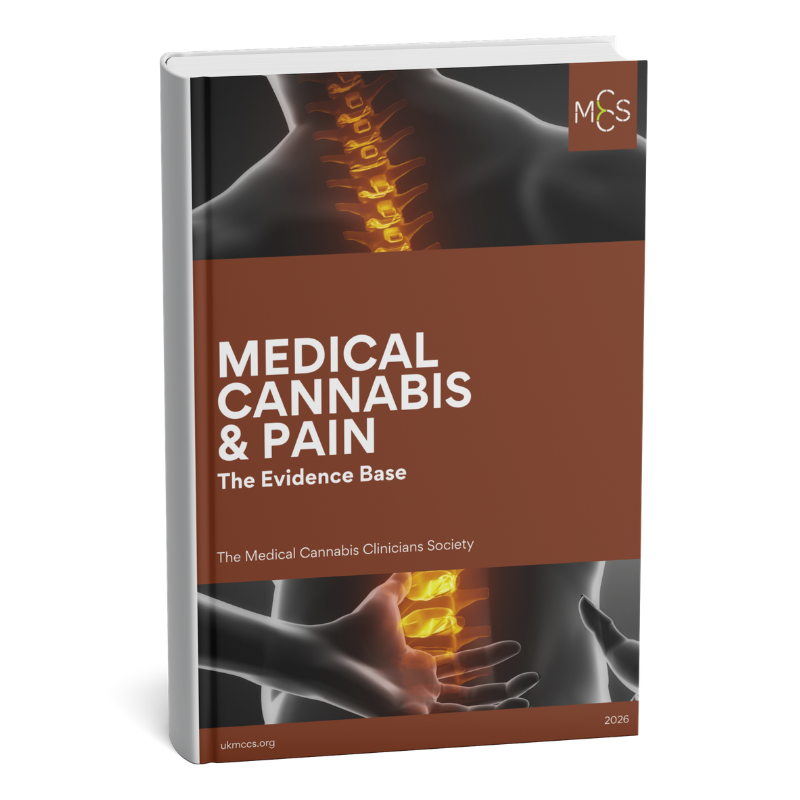
A comprehensive review of the evidence for pain
This publication brings together a substantial body of clinical evidence on medical cannabis for pain, drawing from a wide range of studies and research sources. It includes:
- 264 references in total
- 124 studies reviewed and summarised in detail
- Covering randomised controlled trials (RCTs), observational studies, open-label studies, and case reports
The clinical evidence is organised and structured to allow clinicians to assess the full body of research on medical cannabis for pain. Each study is broken down clearly, outlining methodology, outcomes, and relevance to clinical practice.
This approach enables readers to move beyond individual studies and understand how the clinical evidence for medical cannabis in pain fits together across different study designs, patient populations, and real-world settings.
Making the evidence usable in clinical practice
One of the key challenges in medical cannabis prescribing for pain conditions is not the absence of evidence, but how that evidence is accessed and interpreted. Research into CBMPs for pain exists across multiple formats, populations, and methodologies. Without consolidation, it can be difficult to draw consistent conclusions or apply findings confidently in practice.
This evidence base addresses that issue directly. By presenting detailed, structured summaries, the publication allows clinicians to:
- Review study findings quickly and consistently
- Compare outcomes across different types of research
- Identify patterns, areas of agreement, and areas of uncertainty
- Build a clearer understanding of the overall evidence landscape
Publication details
- Format: Digital (PDF)
- Length: 91 pages
- Authors: Medical Cannabis Clinicians Society
- Year: 2026
- ➡️ Purchase the Medical Cannabis and Pain Evidence Base
Part of the MCCS Evidence Base Series
The Medical Cannabis and Pain Evidence Base forms part of the wider MCCS Evidence Base Series, developed to support clinicians across key areas of prescribing.
Other titles in the series include:
- Introduction to Medical Cannabis
- Medical Cannabis and Epilepsy
Each publication follows a consistent structure, focusing on detailed study summaries and practical interpretation of the evidence.
The next title in development is Medical Cannabis and Psychiatry
Together, the series provides a growing library of clinically relevant resources to support safe, informed, and consistent prescribing.
Medical Cannabis and Epilepsy: The Evidence Base
About the Evidence Base
This evidence summary provides a comprehensive, research-based review of the role of medical cannabis in epilepsy. Written for clinicians, educators, healthcare professionals and informed readers, it brings together current scientific understanding, clinical evidence and real-world outcomes in one accessible resource.
Introduction to Medical Cannabis: The Evidence Base
About the Evidence Base
This evidence summary provides a clear, accessible introduction to the scientific and clinical foundations of medical cannabis. At a time when understanding is evolving rapidly, this publication offers a direct, evidence-based overview that educates, informs and supports better decision-making in an emerging area of medicine.