Are you looking for expert advice...

The Medical Cannabis Clinicians Society is an independent community of medical cannabis pioneers – the first prescribers of this treatment in the UK. We believe that every patient who could benefit from medical cannabis should have access to it.

Though we are primarily are a society for clinicians and health care professionals, we think it’s crucial that patient voices are heard. To ensure we remain an inclusive, relevant, informed, and open organisation, we’re launching a patient committee, made up of medical cannabis patients and patient advocates from across the UK.  This patient committee will take the lead on our work with independent patient groups from across the sector. 

Members of the MCCS Patient Committee will be required to attend a bi-monthly online meeting where we will discuss priorities for the Society, feedback on publications and projects and discuss relevant developments. Membership is limited to 10. To apply, please email [email protected] with a brief cover letter explaining why you would like to be involved.  The closing date is Wednesday 15 July 2020. 

PLEA (Patient Led Engagement for Access) has been established to challenge the inequalities in access to cannabis-based medicinal products in the UK.

Despite the 2018 schedule change allowing doctors to prescribe medicinal cannabis, patients are still faced with multiple barriers, including misinformation, stigma, and financial constraints, preventing access to potentially life-changing medicine.

PLEA’s mission is to advocate for quality of life with medicinal cannabis, aiming to enable patients to access their medicine free from the harms of stigmatisation, misinformation and financial barriers.

Patients are in need of assistance to navigate complex healthcare systems, clinicians wish to learn from patient experiences, and research is needed to evidence the efficacy and safety of medicinal cannabis. PLEA collaborates with patients, clinicians and researchers as one community, sharing knowledge and experiences in order to advance access to medical cannabis.

As with The Medical Cannabis Clinicians Society, PLEA is a non-profit, volunteer-run community interest company, enabling the team to advocate for patients free from commercial interference.

Working closely with Drug Science as a member of their Medical Cannabis Working Group, PLEA will support patients accessing Project Twenty21, Europe’s largest body of evidence for the safety and efficacy of prescribed medicinal cannabis.

Find out more about please visit www.pleacommunity.org.uk.


*March 2021 Update: Members of the Medical Cannabis Clinicians Society can now access exclusive medical cannabis insurance under our low-cost Group policy. Please read our updated information here.

At The Medical Cannabis Clinicians Society, we’re dedicated to providing straightforward guidance, information and support for clinicians wishing to prescribe medical cannabis.  Doctors often come to us with questions about their professional indemnity and insurance coverage, with some insurers not including medical cannabis treatments in their packages.

In England, doctors working for NHS trusts and health and social care bodies are provided with indemnity insurance through the Clinical Negligence Scheme for Trusts (CNST). Similar arrangements are in place for Scotland, Northern Ireland, and Wales.

Insurance for private practice

When it comes to being insured for prescribing medical cannabis, due to current prescribing restrictions, things are different. As medical cannabis in the UK is currently only available privately, doctors working outside of the NHS – often for the first time – have questions about how to arrange insurance and indemnity which covers this treatment.

The General Medical Council states that doctors working in private practice in the UK must have “adequate and appropriate insurance or indemnity arrangements in place covering the full scope of your medical practice”. This means that even if doctors are working privately within an NHS or health and social care body premises, they must still be covered.

Prof Michael Barnes, Chair of the Medical Cannabis Clinicians Society said, “Apart from two specific medications, Sativex and Epidiolex, medical cannabis – along with many other treatments – is at present classed as an unlicensed medicine. Doctors prescribing unlicensed products take full clinical responsibility for any consequences of the prescription and might not be covered by professional indemnity insurance. This is something that causes many clinicians concerns and prevents more widespread prescribing.

 Medical cannabis is a safe treatment with often significant benefits and few side effects. Clinicians can be reassured that if they prescribe within the legal parameters then they are very safe – although they still need insurance cover.”

Finding insurance that covers medical cannabis prescribing

When you are looking for new insurance, which includes medical cannabis, as a doctor operating in the private sector for the first time, or you’re renewing your existing coverage, it’s important to choose your provider well.

If doctors are already working privately, with insurance already in place, then it is important to check with your insurer that the changes in your scope of practice – i.e. starting to prescribe medical cannabis products – are included in your existing coverage.

Next steps

The route to becoming a medical cannabis prescriber in the UK can be a complex one, with regulations and rules to follow to ensure you are on the right side of the law. From being aware of the guidelines on medical cannabis to following the route for controlled drugs, read our guide ‘How to prescribe medical cannabis’, available here.

Read How to prescribe medical cannabis.

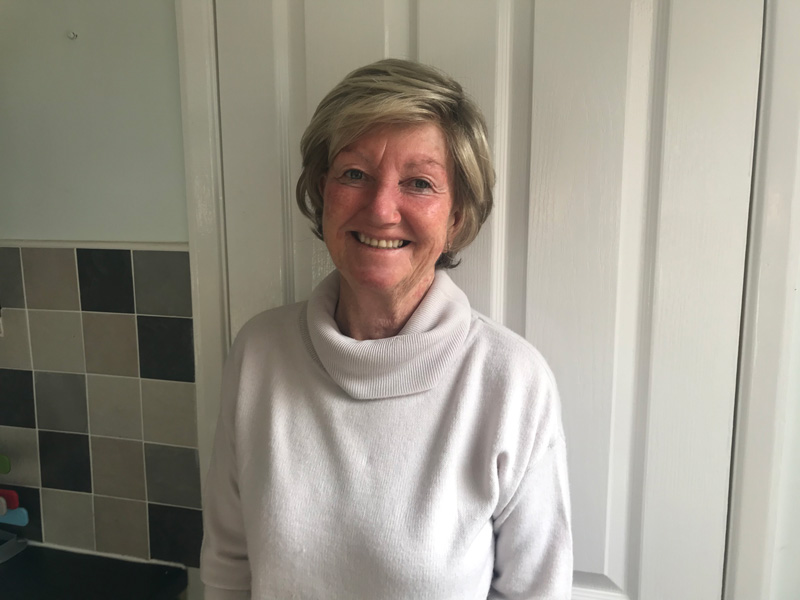
Hilary Latham from York uses medical cannabis treatment as part of her cancer treatment. Here, she tells her story.

In September 2009 I was diagnosed with breast cancer. One mastectomy later I was told the operation had been a success. I was one of the lucky ones… or so I thought.

Ten years later, in February, I moved to York to be near my two daughters, my new grandson, plus another grandchild on the way. Things were looking good. Aged 65, single (apart from the love of my life, my dog!), I was still fit enough to chase my grandchildren around the garden and continue my successful painting and decorating business.

As this year progressed I noticed that my mild asthma was getting progressively worse and by July I was feeling quite ill. A trip to the doctors was quickly followed up by admission to hospital where I was told the cancer was back and had spread to my liver. As a secondary cancer, I realised I wasn’t going to be so lucky this time. My oncologist confirmed I had stage 4 cancer and my life expectancy, without chemotherapy, was just a matter of months, and with successful chemotherapy I had perhaps one to two years.

Considering chemotherapy treatment

I had always thought that if the cancer returned, I wouldn’t have chemotherapy, I didn’t want to spend whatever time I had remaining in this life to be spent on an endless merry go round of potentially debilitating treatment. I also hadn’t planned on the additional complication of hypercalcemia. The cancer was affecting the amount of calcium in my blood, which can be life-threatening. I was very poorly.

As an active outdoorsy type of person, quality of life is so important to me. I realized that the prognosis of just a few months to live wouldn’t give me the time I needed to make some precious memories. I knew I would have to take the chemotherapy route to try to reduce the cancer, which in turn would hopefully reduce the calcium in my blood. In my life I’ve been blessed with a positive mind et, never been one to say, ‘what if?’ negatively. This was time to get the gloves on, time to fight!

Making that decision was so empowering. I couldn’t sit there waiting to fade away or fall prey to the debilitating chemotherapy. I understand many people have an easier journey than others on chemotherapy, but with my limited life expectancy, I needed to know my chemotherapy journey would enable me to have a quality of life to be active and enjoy my grandchildren.


Exploring medical cannabis treatments

In addition to being a decorator, I’m a complementary healthcare practitioner and I’ve had 20 years’ experience researching many potentially healing therapies. I believe that there are many avenues we can take to help in all areas of our health, and I was about to discover a great ally on my journey – medicinal cannabis. Do I hear an intake of breath, an occasional tut-tut, mutterings of illegal drugs at the mention of a natural plant that has been around for thousands of years?

To be absolutely correct, I didn’t ‘discover’ cannabis this year. I was already aware of its existence and had been for a couple of years. I was living in Portugal where the laws regarding cannabis are far more lenient than in the UK. Many people grow it for their own use and my neighbour at the time, a terminally ill lady with secondary cancer, purchased medicinal cannabis from Holland, another country that doesn’t look upon cannabis as an evil weed. I witnessed her final months and was amazed how well she managed – enjoying her life, socialising and being in her garden right up till the last two weeks of her life.

I have been in hospital a fair amount this year with the hypercalcemia and met some amazing people fighting for their lives with cancer. One lady mentioned to me she had bought some cannabis oil on the internet. At this time, I admit I didn’t have much faith in something I could ask Google for, so it was time for research.


Research, education and changing attitudes

I am blessed with a very special friend who has left no stone unturned on her quest to help me, spending hours and hours on research. That research led her first to America and then the UK – in particular to Prof Mike Barnes and The Medical Cannabis Clinics. I was told I would need to be referred by my GP to see a specialist. I can imagine the horror on some faces at the thought of approaching their GP to get cannabis!

Luckily for me,  my GP is something else. He goes that extra mile to help his patients and after his initial ‘rabbit in headlights’ reaction, he set about doing his own research and put me in touch with Dr Iveson in York.


The journey to treatment

Dr Iveson is a Consultant Physician specialising in complex care and symptom management particularly in the elderly and patients with stroke and long term conditions. She is working with the Medical Cannabis Clinician’s Society and charity Drug Science to further develop research into medical cannabis treatment and help educate and share her experience with fellow doctors.

During my initial consultation with Dr Iveson I was most impressed by her care and professionalism. My target was to take medicinal cannabis to help alleviate the potential side effects of chemotherapy such as nausea and sickness, plus help with insomnia and anxiety. I left with confidence in knowing I had made a major step forward towards a better quality of life during the daunting journey of chemotherapy.

After my initial delight in the positive attitude of my GP, I didn’t anticipate the reaction of others when I told them I was taking medicinal cannabis. Because of my research and openness to cannabis, I hadn’t realised the stigma behind something so natural. There is something about the word cannabis that really gets a reaction, either a snigger behind the hand or from friends warning me not to mention drugs in front of their partners. My favourite though is the ‘rabbit in headlights’ reaction which I received when I took my prescription to the chemist, which was followed by much huffing and puffing from the pharmacist on duty. But, the pharmacist did some research and realised he was part of something quite ground-breaking. It’s amazing what a bit of education can do!


The impact of medical cannabis treatments

I could hardly wait to begin taking my prescription. I am taking a balanced CBD:THC oil at night and a high CBD oil during the day to manage my symptoms and I am slowly titrating the dose upwards with support and close monitoring from Dr Iveson. It took a short while to appreciate all the benefits but it has been quite amazing.

My mouth ulcers have completely disappeared, I’m sleeping very well, and I’m managing my nausea and sickness so much better. One bonus I didn’t realize is that medical cannabis is an anti-inflammatory and opens the airways. It has helped my asthma and my breathing is so much better. I’m in a very positive state of mind and that in itself is a very powerful tool. My oncologist is aware I am taking medicinal cannabis and in the future perhaps we may see a great relationship forming between all health professionals working towards a better quality of life for all.


Medical cannabis for all

Medicinal cannabis is not cheap. I had some savings for a rainy day – but I didn’t think that rainy day would come so soon. My savings won’t last forever and I can only hope that in the not so distant future, the price will come down as the demand goes up. And one day, I hope it will be available to all on the NHS.


Hilary passed away in 2020. We are honoured that she chose to share her story with us.

Hannah Deacon, Executive Director, whose son, Alfie Dingley was the first patient in the UK to receive a permanent cannabis licence, tells her story.

When Alfie was born, he spent the first four months of his life in hospital, lived on and off life support and experienced his first seizure at just eight months old.

Alfie lives with a very rare form of epilepsy and, prior to medical cannabis treatment, experienced more than 500 seizures a month. Now, Alfie, aged eight, lives a relatively normal life thanks to using cannabis oil treatment.

After trying various treatments, anti-epilepsy drugs, a ketogenic diet and immuglobulins, the only treatment that reduced his seizures was a steroid called IV Methyl Prednisone that can cause severe side effects, including mood swings, restlessness and headaches.

At age five, Alfie’s condition got worse. He was visiting the hospital every week and receiving up to 25 doses of steroids a month.

Discovering medical cannabis

In 2019, Alfie’s mum Hannah, took action. After being warned by doctors around the dangers of his seizures and treatment, Hannah began to research other options for her son.

Hannah said: “When doctors advised us on the dangers of Alfie’s treatment, I needed to look into other options. I started to research epilepsy treatments and medical cannabis kept coming up – and felt confident that it was a positive option.

“I wanted to know that whatever happened, I had done everything I could to keep Alfie alive.”

After a series of setbacks from her GP, Hannah was eventually given permission to take Alfie to Holland for medical cannabis where he was assessed and immediately prescribed with the treatment he so desperately needed – Bedrolite CBD oil.


The beginning of Alfie’s miracle

After five weeks of medical cannabis treatment Alfie experienced 17 days without a seizure – the longest amount of he had ever gone without experiencing one.

Hannah said: “It was the beginning of our miracle.

“As time went by, we put up the dose of CBD and Alfie started to get better. We then added in a small amount of THC and he did even better. Treatment with cannabis oil has given Alfie a much greater quality of life and significantly reduced the number of seizures he suffers.”


Fighting for medical cannabis to be available on the NHS

Returning home, Hannah was ready to fight the biggest battle she had ever had – fighting for medical cannabis to be available on prescription for patients.

Hannah started work with the campaign group,’ End Our Pain’.  Appearing on national TV channels, she made BBC Breakfast where she told Alfie’s story.

After meeting with the Home Office but getting nowhere, Hannah submitted the group’s petition to former Prime Minister, Theresa May, and subsequently met with her.


Meeting Professor Mike Barnes

Alfie’s doctor was unfortunately unable to help due to the trust they worked for however, it was then when Hannah met Neurologist and Professor Mike Barnes. When Hannah told Mike about Alfie’s story, he agreed to help.

Hannah said: “Mike stood forward when no one else would. He gave his time and expertise for free because he felt it was the right thing to do. He has now become a lifelong friend and we now work together to improve access to medical cannabis for patients across the UK.”


Law changes for medical cannabis

In November 2018, after a long fight – the law changed which now allows medical cannabis to be prescribed as a ‘special’ by a consultant. Although around 500,000 people in the UK have epilepsy, not one more person has been prescribed the treatment on the NHS since this case.

The NHS is yet to offer medical cannabis on prescription due to very restrictive guidelines for clinicians. There is still a long way to go to ensure more people like Alfie can access medical cannabis to drastically improve the quality of their lives.