Member Spotlight: Dr Derek Proudlove on psychiatry, patient choice and medical cannabis
October 13, 2026 | IN MEMBERS | BY Kate Thorpe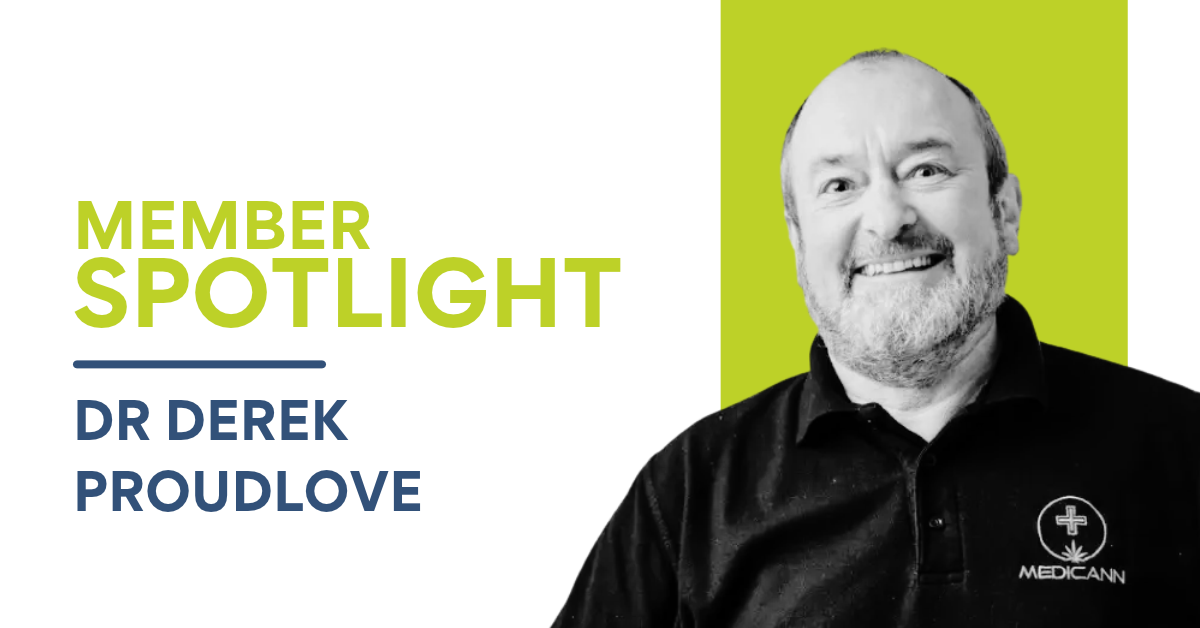
Consultant psychiatrist Dr Derek Proudlove works with patients whose mental health histories can make prescribing decisions complex. He reflects on his route into cannabis-based medicine, his growing enthusiasm for the field and the tensions between patient choice and professional caution.
Dr Proudlove’s interest in cannabis-based medicine began by listening to patients. Hearing their experiences, then observing medical cannabis consultations, turned curiosity into a commitment to the field.
Today, he works full time in a medical cannabis clinic covering the Isle of Man, Jersey and Guernsey. A consultant psychiatrist whose experience covers the whole range of psychiatry, he has worked extensively with adolescents and has longstanding interests in trauma, dissociation and talking therapies.
Dr Proudlove is specifically interested in the issue of prescribing safely for patients with complex mental health histories, who may be considered high risk; and how we can balance the needs of the patient with the possible risks to the clinician.
From listening to patients to observing clinics
Dr Proudlove’s early awareness of cannabis came through his work with young people. “As a child and adolescent psychiatrist, I was aware that some of my older adolescent patients found cannabis beneficial. I thought that medicinal cannabis would be something interesting to investigate.”
A change in his professional circumstances gave him the opportunity to investigate further. In 2021, he resigned from the health service and began private practice.
“Sitting in clinics as an observer to begin with, I realised how effective cannabis is and saw the life-changing impact that it was having for many patients. This was very exciting.”
Those observations helped move cannabis-based medicine from an area of curiosity to a full-time focus for his work.
Initial concerns and a changing perspective
Dr Proudlove’s enthusiasm developed alongside stubborn questions shaped by his professional background and education in the field. “I had concerns that cannabis might cause psychosis or schizophrenia, which is a widely held belief amongst mental health professionals.”
Reflecting on his experience since then, he says: “I have been surprised that side-effects are uncommon. I am getting used to seeing it changing lives for the better. I have become a strong advocate for medical cannabis and it is rewarding to see patients’ lives being transformed.”
Dr Proudlove has strong views about the combinations of conventional medicines some patients receive. Polypharmacy – the use of multiple medicines – is one of the issues he highlights when reflecting on the wider treatment experiences of patients entering cannabis clinics.
“In terms of conventional treatments and polypharmacy it is shocking to see the cocktails of antidepressants, antipsychotics, benzodiazepines, pregabalin etc, that patients end up on. This is similar for chronic pain patients.”
For some patients, improvements in symptoms may offer an opportunity to review and reduce other medicines under clinical supervision.
Learning from difficult professional encounters
Not all colleagues have welcomed Dr Proudlove’s involvement in the field.
Dr Proudlove describes encountering hostility in discussions, though he sees them positively. “These, sometimes unpleasant, interactions are good learning experiences and are reminders to be very clear about the rationale for prescribing and the risks. It also gives me things to reflect on in a peer group and for my appraisal.”
For Dr Proudlove, these encounters are part of the wider challenge of working in a field that he wants to see become more accepted and respected within medicine.
Dr Proudlove’s underlying views about patient care and patient choice have not changed. However, he believes cannabis-based medicine raises controversial questions about how those principles are applied, and he places particular value on the experience and knowledge patients bring to consultations.
“There is a strong emphasis on defensive practice, in this new field, which can prevent doctors from allowing patient choice. We must remember that there is more patient expertise here than in other areas of medicine, so patients should have more say in their own treatment, not less.”
Dr Proudlove also favours an individual approach to prescribing for people with complex mental health histories, taking account of their current circumstances as well as their past experiences. His interest lies in how clinicians can carefully assess risk while giving patients a meaningful voice in treatment decisions.
However, he identifies dependence and patterns of use as challenges. “Managing dependence on cannabis, overuse or misuse is a challenge. Especially while trying to give the patient choice and control over their own treatment.” This balance between managing cannabis use and supporting patient autonomy is one of the central challenges of his work.
Evidence, professional acceptance and listening
For Dr Proudlove, a major challenge is how cannabis-based medicine can become accepted and respected by the medical profession. He identifies the lack of randomised controlled trials (RCTs) as a barrier to doctors engaging with the field.
“The lack of RCTs is a barrier for doctors. How can we help them to understand the reasons for the lack of RCTs and the importance of real-world evidence?”
Dr Proudlove has also found it challenging when professional bodies take a position on cannabis-based medicine that he feels is unsupportive of its potential role in patient care. “I would suggest to doctors that they listen to their patients who are on medicinal cannabis.”
Dr Proudlove’s ambitions for the field include wider access through the NHS. His optimism also reflects his interest in cannabinoid receptors and their role in homeostasis, the regulation of the body’s internal balance.
“I am hopeful knowing that cannabinoid receptors are so abundant in the brain and body; and understanding the role they have in homeostasis, means that this will be a very important medicine in the future.”
Join the Medical Cannabis Clinicians Society
Interested in learning more?
Build your knowledge through the Society’s online courses, designed to help healthcare professionals explore cannabis-based medicine and the developing evidence with confidence.
Join the Medical Cannabis Clinicians Society to receive member discounts on courses and access educational resources, expert insights, professional events and opportunities to connect with colleagues across the sector.