Member Spotlight: Dr Sheila Popert on curiosity, caution and cannabis-based medicine
September 9, 2026 | IN MEMBERS | BY Kate Thorpe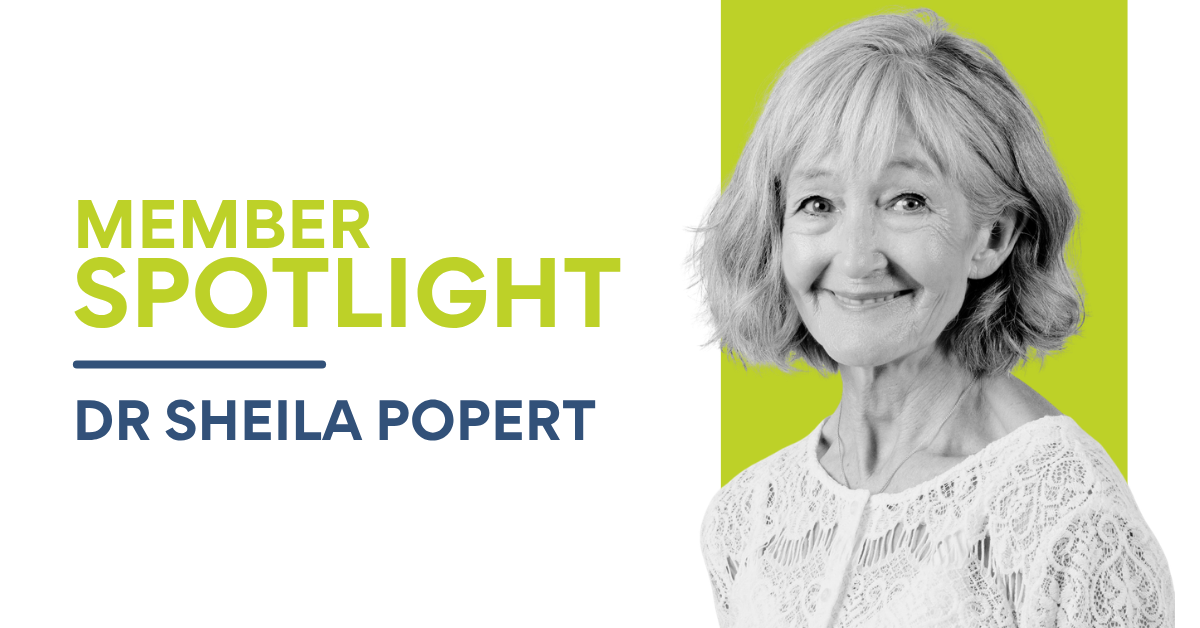
Dr Sheila Popert BDS Hons LRCP MRCS has been a Consultant in Palliative Medicine for more than 35 years, with a longstanding commitment to holistic, patient-centred care. Throughout her career, she has witnessed both the strengths and limitations of conventional treatments, as well as the unmet needs of people living with complex pain, psychological distress and reduced quality of life.
Today, she is Medical Director of Indra Clinic and Specialist Consultant at Emerald Health, and prescribes cannabis-based medicinal products (CBMPs) but her interest in cannabinoid medicines began several decades ago.
Early experiences in oncology and palliative care
Dr Popert was first introduced to cannabinoid medicines in the late 1980s while working as a lecturer in oncology at the Royal London Hospital. Some patients experiencing severe nausea and vomiting from cancer treatment were prescribed nabilone when conventional antiemetics had failed.
“What struck me was that, for certain patients, it worked remarkably well. Their vomiting improved sufficiently for them to continue cancer treatment that they might otherwise have had to stop.It certainly didn’t work for everyone, but when it did, the difference could be dramatic.”
More than a decade later, while working as a Consultant in Palliative Medicine and running a joint clinic with a neurologist, she saw some patients with multiple sclerosis and severe neuropathic pain respond extremely well to Sativex. In both settings, the medicines were not universally effective, but for some patients the improvement in symptoms and quality of life was significant.
“That was what initially interested me in the potential of cannabis-based medicines: not as a panacea, but as another potentially valuable therapeutic option when more conventional approaches have not provided sufficient relief.”
The prescription that became a turning point
The experience that prompted Dr Popert to investigate the field more seriously came during a home visit to a patient with advanced cancer. “We had been struggling to control the pain caused by a pancreatic tumour, and during the visit he told me that he had received a prescription for medical cannabis from a private clinic.”
Until then, Dr Popert had not appreciated that CBMPs could be prescribed in the UK beyond the medicines with which she was already familiar. “I asked to see his prescription and have to confess that, at the time, it looked like complete gobbledegook to me. I could make neither head nor tail of the different cannabinoids, concentrations and formulations. That was a real turning point. I thought that if my patients were being prescribed these medicines, I needed to understand them properly.”She began researching the field in earnest, and the more she learned, the more interested she became.
From scepticism to understanding
Dr Popert is open about her initial reservations. The breadth of claims being made about cannabis caused her to wonder whether some of it was simply “snake oil”. She was also concerned about misuse, adverse effects and the risk of psychosis associated with THC. She decided to investigate the evidence, reading widely and completing courses from organisations in countries where medical cannabis had been prescribed for longer.
A further turning point came when she undertook the MCCS course led by Professor Mike Barnes and began to understand the endocannabinoid system and its role throughout the body. “That didn’t mean accepting every claim made for medical cannabis. I remain a clinician who wants to see good evidence, but it shifted my perspective considerably. What I had initially regarded with considerable scepticism became a fascinating and credible area of medicine that I felt deserved much greater attention.”
She was also conscious of the stigma surrounding cannabis and initially worried about what colleagues, friends and family might think. “I was slightly embarrassed to admit that this was an area of medicine I was seriously considering becoming involved in. For quite some time, I didn’t tell anyone that I was exploring it.” As her knowledge grew, she became more confident discussing CBMPs as a legitimate therapeutic option.
A complex and highly individualised treatment
One of Dr Popert’s biggest surprises has been the complexity of cannabis-based medicine. Before becoming involved, she had imagined that prescribing would be relatively straightforward and largely centred on THC and CBD.
“I now appreciate that THC and CBD are just two of the many phytocannabinoids found within the cannabis plant, and that the wider cannabinoid profile, together with terpenes and flavonoids, may also influence the effects of different preparations. Add to that the importance of formulation, route of administration, individual sensitivity, drug interactions and, above all, careful titration and monitoring, and it becomes a remarkably nuanced area of medicine.”
She has also been surprised by the difference treatment can make for some patients who have experienced persistent symptoms despite trying numerous conventional options. “It certainly does not work for everyone, and I remain cautious about overstating the evidence. But when it does work, the improvement can sometimes extend beyond a single symptom. A patient may sleep better, experience less pain or anxiety, and consequently function better and regain some quality of life.”
This reflects the holistic principles that have guided Dr Popert throughout her career: listening carefully to patients, understanding what matters to them and considering whether a treatment is helping them achieve meaningful outcomes. She has also long been concerned about polypharmacy. For some patients, improvements across symptoms such as pain, sleep and anxiety may create an opportunity to carefully review other medications. “I don’t see CBMPs as an alternative to conventional medicine, but as another potential tool within a broader therapeutic approach.”
Responsible prescribing and clinical curiosity
The most rewarding part of Dr Popert’s work has been seeing patients find relief from distressing symptoms, particularly when numerous conventional treatments have not provided sufficient benefit. “Seeing someone sleep better, experience less pain or anxiety, or simply regain some of their day-to-day quality of life is enormously rewarding.”
At the same time, responsible prescribing requires careful titration, monitoring and an individualised approach. “With CBMPs, as with any medicine, the aim is not simply to prescribe a product, but to find the lowest effective dose that provides meaningful benefit while minimising unwanted effects.”
Dr Popert believes that a basic understanding of CBMPs is becoming increasingly important across all clinical specialties. Even clinicians who do not intend to prescribe are increasingly likely to care for patients who use them. “So, I’d tell fellow clinicians – remain cautious, but be curious. You don’t have to become an advocate for medical cannabis – just learn enough to make an informed judgement for yourself.”
Moving towards mainstream medicine
Dr Popert is encouraged that more clinicians are approaching cannabis-based medicine with curiosity rather than immediately dismissing it. For her, education will be central to further progress. “I would love to see the endocannabinoid system and cannabis-based medicines incorporated into the undergraduate curriculum for doctors, nurses, pharmacists and other healthcare professionals.”
She also believes that medical cannabis must continue moving away from its recreational associations. One practical step would be to reconsider the names given to some medicinal cannabis products. “I can completely understand why a GP with little knowledge of CBMPs might raise an eyebrow on discovering that their patient has been prescribed something called ‘Wedding Pop Triangle’ or ‘Zookies’. Whatever the quality or therapeutic value of the product, the name immediately sounds recreational rather than medicinal.”
Looking ahead, Dr Popert believes greater education, better research and increasingly professional standards will help reduce stigma and build confidence. “My hope is that, in time, cannabis-based medicines will be judged in the same way as any other treatment: on the quality of the evidence, their safety and, most importantly, whether they provide meaningful benefit for the individual patient.”
Interested in learning more?
Start building your knowledge with our online courses, designed to help healthcare professionals explore cannabis-based medicine and the developing evidence with confidence.
Join the Medical Cannabis Clinicians Society to receive member discounts on our courses and access educational resources, expert insights, professional events and opportunities to connect with colleagues across the sector.